
Strategy · Guide · 5 MIN READ
The Rebuild Fallacy: Why a Software Rewrite Costs You Speed
The old software is slow, so you build it completely anew — that's how one of the most expensive misunderstandings in IT begins. Why the blank-slate project rarely delivers what it promises, and how we approach modernization instead.
strukturunion Team · August 22, 2023
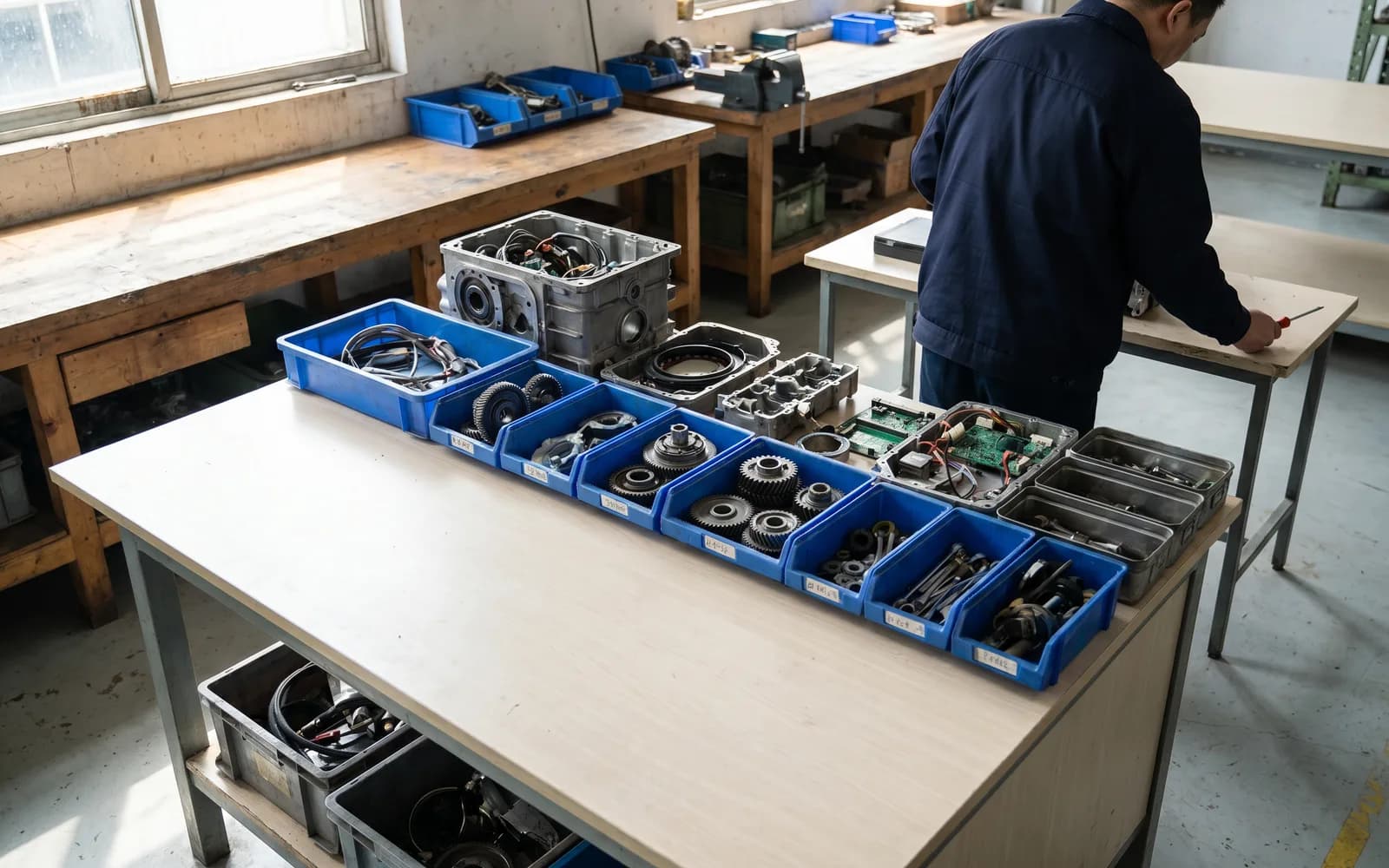
Eventually the core application turns sluggish, tangled, technically overloaded. The development team proposes rebuilding it from the ground up — with a modern framework, clean, free of legacy baggage. Management signs off on a multi-year project. Two years later the budget is blown, key features are missing, and the old system is still running because it can't be switched off. This pattern repeats in a surprising number of organizations.
The pattern
The blank-slate rebuild is a tempting mirage. It assumes that technical debt can simply be left behind if you just start fresh. What gets overlooked: old software is not merely old source code. It is a living record of thousands of special cases, individual business rules, and bug fixes hard-won over years of real operation. Every one of these small details stands for a situation where something once went wrong and someone set it right.
Starting from zero throws away this accumulated operational knowledge. Most of the effort then goes not into new capabilities, but merely into reaching the old system's feature set again. After a long time and a large investment, the best the user sees is the same as before — only with new, as-yet-undiscovered bugs. Meanwhile, further development stalls because every resource is tied up in the rebuild.
From our practice
As a small, efficiency-driven consultancy, we deliberately turn down complete system rebuilds. We work consistently by the strangler fig pattern — the image of the strangler fig that slowly wraps around a tree and eventually replaces it. The core system stays in operation. We peel off individual, especially painful workflows one after another.
In concrete terms, it looks like this:
- The biggest pain point first. We look for the part that causes the most friction — not the technically most interesting one, but the one that slows down everyday work most noticeably.
- Build a bridge. Over that one component we place a modern building block or a lean web interface that docks cleanly onto the existing system.
- Prove the value. As soon as the new building block is running, it becomes clear right away whether it holds up. Only once that stands do we move on to the next piece.
This step-by-step approach keeps the risk for the organization small. There is no big cut-over date on which everything is switched at once and everything can go wrong at once. Instead, every month delivers measurable progress, and day-to-day business runs on without interruption. That is the decisive point: modernization must not bring the pace of operations to a halt, only to maybe pick it up again later.
When a rebuild does make sense
There are exceptions, and we name them honestly. When the underlying technology can no longer be operated, when no one holds the necessary knowledge anymore, or when a security risk cannot be closed any other way, there is no way around a larger cut. But even then we do not rebuild blindly; we first secure the experiential knowledge from the old system — the special cases, the exceptions, the unwritten rules. They are the real capital, not the code.
Takeaway
A slow system is a real problem, but a complete rebuild is rarely the answer. It promises a clean start and often delivers only an expensive detour back to the starting point. Modernizing piece by piece instead keeps the experiential knowledge, the pace, and the control. If you're wondering whether your application needs a fresh start or is better served by a step-by-step overhaul, we're happy to look together at where the first sensible cut lies.